

E-export is a scalable and technology-oriented business model where products are presented to global markets through digital channels. By 2026, digital borders have largely disappeared, and the world has become a single market for local businesses. As traditional export models give way to a new generation of AI-supported, data-driven trade, this transformation mandates that brands not only ship products but also establish a global-scale technology strategy.
It is now much easier to open your brand to international markets and accelerate global growth with the right market and strategy. Magna Dijital Marketing Agency is with you at every stage of your e-export journey with data-driven analyses and digital infrastructure solutions. You can reach us immediately at 0850 333 80 91 or visit our E-Export Consultancy Services page for detailed information.
Beyond Digital Borders: The New Definition of E-Export in 2026
In 2026, e-export represents a process much more complex than merely sending a package across borders. The pace of digitalization in global trade requires brands to be present everywhere at any time, not only in the physical world but also through their digital assets. Today, a successful e-export strategy rises in the hands of brands that can analyze the cultural codes of the target market through artificial intelligence. This new definition makes it mandatory to turn technology into the main lever at every stage of the operation and use data as growth fuel.
Artificial Intelligence (AI) and Hyper-Personalized Shopping
The global consumer of 2026 demands a digital journey that is completely customized for them, rather than a standard shopping experience. AI-supported algorithms track the consumer's digital footprints to offer personalized product offers exactly when they need them. These systems can accurately predict not only the user's past but also their possible future needs.
Dynamic pricing systems, on the other hand, provide brands with the most competitive position by processing competitor data and global demand fluctuations in real-time. Consumers make purchasing decisions much faster when they see prices optimized for them. Hyper-personalization is accepted as the most important technological component ensuring customer loyalty in e-export projects.
Transition from Classic SEO to GEO (Generative Engine Optimization) 
The world of search engines underwent a fundamental change in 2026, with classic list results largely giving way to AI answer engines. In this era, visibility for brands is no longer just about rising in Google keywords, but being the primary recommendation in the response pool of systems like ChatGPT and Gemini. Generative Engine Optimization (GEO) is a next-generation discipline that ensures your brand is accepted as an authority by artificial intelligence.
Brands wanting to succeed in e-export now configure their content strategies according to the technical logic of these AI-based answer engines. Being the brand recommended as the "best solution" by AI provides a much higher conversion rate than traditional advertisements. The accuracy of technical content and trust signals have become the new keys to global visibility.
This evolution of SEO has fundamentally changed the way brands exist digitally and their content production processes. Now, success is not about keyword stuffing but providing structured data that AI can understand. Brands that manage this process correctly scale much faster organically in global markets.
For global SEO and conversion-oriented e-export websites on Shopify, WooCommerce, or custom infrastructures, reach us now at 0850 333 80 91 or visit our E-Export Web Design page.
Gateways from Turkey to the World: Strategic Market Selection
Turkey continues to play a central and strategic role in the global e-export map of 2026 with its production capacity and logistical advantages. The road to success lies in adapting to the unique digital dynamics and legal regulations of each region rather than approaching every market with the same strategy. Making data-driven market choices minimizes investment risks and allows brands to use their resources with the highest efficiency.
The European Market and Sustainability Criteria
In 2026, the European market draws attention with extremely strict sustainability regulations. Green Deal rules mandate that e-exporting brands transparently declare their carbon footprint and produce environmentally friendly solutions. The entry of brands that do not comply with these criteria into the European market is made difficult by legal regulations.
For European consumers, a brand's ethical production values have become a decisive preference factor that precedes price and quality. Transparent supply chain management must be presented to the consumer at every stage in a verifiable way through digital platforms. Brands now compete not only with what they sell but also with how respectfully they produce that product toward nature.
Turkish brands wanting to be permanent in this market must support their digital strategies with an environmentally friendly and sustainable brand image. Sustainability data has become one of the fundamental trust elements featured most prominently on product pages and advertising messages. The future of e-export lies in the integration of trade with green technologies.
Recyclable packaging and low-emission logistics networks are investments that optimize the operational costs of brands in the long run. The way to create a loyal customer base in Europe is to weave these values into the brand's soul. In 2026, green trade is not an option; it is a ticket to enter the market.
Middle East and Turkic Republics: The Growing Digital Economy
In 2026, the Middle East and Turkic Republics are among the most dynamically growing digital markets in the world, driven by a young population. In these regions, shopping habits are shaped around local marketplaces and "social commerce" channels conducted through social media. Peak mobile usage rates have made it inevitable for brands to develop mobile-first strategies.
Brands that quickly adapt to local payment systems and cultural habits gain large market shares in these geographies in a short time. Combining the logistical proximity advantage with a strong digital marketing structure creates massive growth potential for Turkey-based businesses. A flawless customer experience offered in regional languages is the biggest card to establish superiority even against local giants in the market.
Determine which country, which product, and which strategy you will enter with our data-driven market analyses. Reach us now at 0850 333 80 91 or visit our E-Export Market Research page.
Operational Excellence: Logistics and Payment Technologies 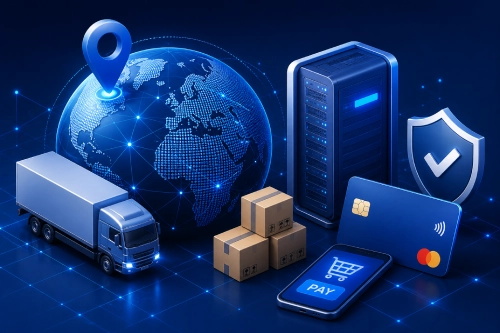
The success of e-export has become directly dependent on how technologically and perfectly operational processes work, far beyond digital visibility. In 2026, logistics and payment systems have attained a transparent structure fully integrated with blockchain and AI technologies. Operational excellence is the fundamental technical pillar that ensures e-export is not only sustainable but also profitable and scalable.
Smart Logistics and Fulfillment Solutions
In 2026, cross-border shipping processes meet consumer expectations by reaching local delivery speeds through smart fulfillment centers. These modern warehouses, managed by AI, minimize warehouse costs by optimizing stock levels in real-time according to demand forecasts. Smart logistics solutions offer the customer full data traceability at every step, from the packaging stage to the moment of delivery.
These systems, where speed and low cost combine, have completely eliminated logistical delays—the biggest obstacle to e-export. Robotic processes and autonomous distribution networks have made global cargo traffic more fluid and manageable than ever before. The promise of "next-day delivery" for customers is now an indispensable market standard even in cross-border sales.
For Turkish brands, these infrastructures allow for much more competitive prices and superior service quality in world markets. The digitalization of logistics processes minimizes operational errors while maximizing brand reliability. Technology-oriented logistics is the new lifeblood of global trade.
Integration of Digital Wallets and Crypto Payment Systems 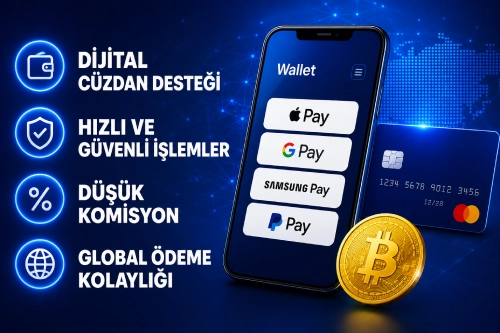
Global payment habits in 2026 have shifted away from traditional methods to digital wallets and decentralized blockchain-based systems. High exchange rate commissions and transfer delays experienced in cross-border transactions have been completely resolved with crypto-based secure payment infrastructures. It is now a commercial necessity for brands to integrate the local digital wallets preferred by each market into their systems.
Offering secure and alternative payment options stands out as one of the most effective technical moves to reduce cart abandonment rates. Blockchain technology has accelerated trade by bringing payment security to the highest level while reducing transaction speeds to milliseconds. Consumers prefer secure platforms where they can pay using methods they find familiar and fast.
This revolution in payment technologies has largely eliminated financial borders and exchange rate risks in e-export. Being able to accept payments in multiple currencies strengthens the global consumer's sense of belonging to your brand. Fast payment is the fundamental key to high conversion rates.
Set up and manage your store on global platforms like Amazon, Etsy, and eBay, and professionally increase your sales performance. Reach us at 0850 333 80 91 or visit our E-Export Global Marketplace Management page.
A 7-Year Digital Transformation and E-Export Journey with İHKİB
As Magna Dijital Marketing Agency, we led the global digital transformation of the Turkish textile sector for 7 years in UR-GE projects conducted under the coordination of İHKİB and with the support of the Ministry of Trade. On this long-term journey covering the years 2017-2024, we did not just offer theoretical knowledge to firms; we positioned ourselves as a strategic transformation partner that would strengthen their e-export muscles. By analyzing the digital maturity levels of nearly 100 exporting firms, we created personalized e-export and SEO roadmaps for each.
We designed this massive project not merely as a consultancy service, but as a system building the digital authority of the Turkish ready-to-wear sector in the world market. Through trainings, one-on-one consultancies, and technical analyses, we brought the web infrastructures of companies to international standards, ensuring they became visible in challenging markets such as Europe and the USA. The concrete outputs of this operation conducted by Magna Dijital Marketing Agency clearly demonstrate the multiplier effect of digital on exports:
- Project Duration: 7 Years of Continuous Consultancy (2017 – 2024)
- Scope: More than 6 UR-GE Projects and Nearly 100 Exporting Firms
- Target Markets: Strategic Restructuring Focused on More than 20 Countries
- Service Quality: Nearly 100% Customer Satisfaction According to İHKİB Surveys
- Commercial Impact: Qualified Lead Flow in International Markets, Primarily Europe and the USA
The İHKİB case study is, for us, the strongest proof of how we can lead multi-stakeholder and complex structures to success digitally, rather than a singular achievement. For 7 years, we increased the digitalization capacity of firms in different sub-sectors such as textiles, ready-to-wear, and fashion accessories, making them part of global competition. The foundation of our e-export solutions offered today with the 2026 vision lies in this deep methodology and corporate discipline gained by guiding the digital transformation of more than 100 companies.
Roadmap to Becoming the Winning Brand of 2026
Becoming the leading brand of 2026 in the e-export world will be the success of those who place technology at the heart of strategy and adapt to change the fastest. Every strategic step you take today is a valuable investment that determines your brand's future global position and market share. There is no other way to reach sustainable and scalable success in global markets than combining technical excellence with a visionary strategy.
To accelerate your international operations by optimizing your fulfillment, warehousing, and delivery processes, reach us now at 0850 333 80 91 or visit our E-Export Logistics Service page.
Frequently Asked Questions
What is the most fundamental difference between e-export and traditional export in 2026?
In 2026, e-export is not just physical product shipping, but a process of AI-supported data management and establishing digital authority. Traditional models have given way to hyper-personalized systems that predict a consumer's need before they even request it.
How does Generative Engine Optimization (GEO) affect e-export sales?
GEO, replacing classic SEO, ensures your brand takes place as the "recommended solution" in AI answer engines. In 2026, consumers trust direct answers provided by AI rather than listed results. Being an authority in these systems multiplies your conversion rates while lowering your advertising costs in global markets.
Which payment methods increase conversion rates in e-export?
In addition to traditional credit card methods, digital wallets and blockchain-based secure payment systems are indispensables of 2026. Integrating local payment solutions preferred by each market (Europe, Middle East, or USA) reduces cart abandonment rates. A secure and fast payment infrastructure is a technical element that directly supports your global brand's prestige.
How can small-scale businesses survive in the intense global competition of 2026?
Success for small businesses lies in focusing on "niche" markets identified with AI data rather than getting lost in a general market. Thanks to GEO and micro-targeting strategies, it is possible to stand out from competitors with massive budgets and reach the right consumer with pinpoint accuracy.
.webp)